
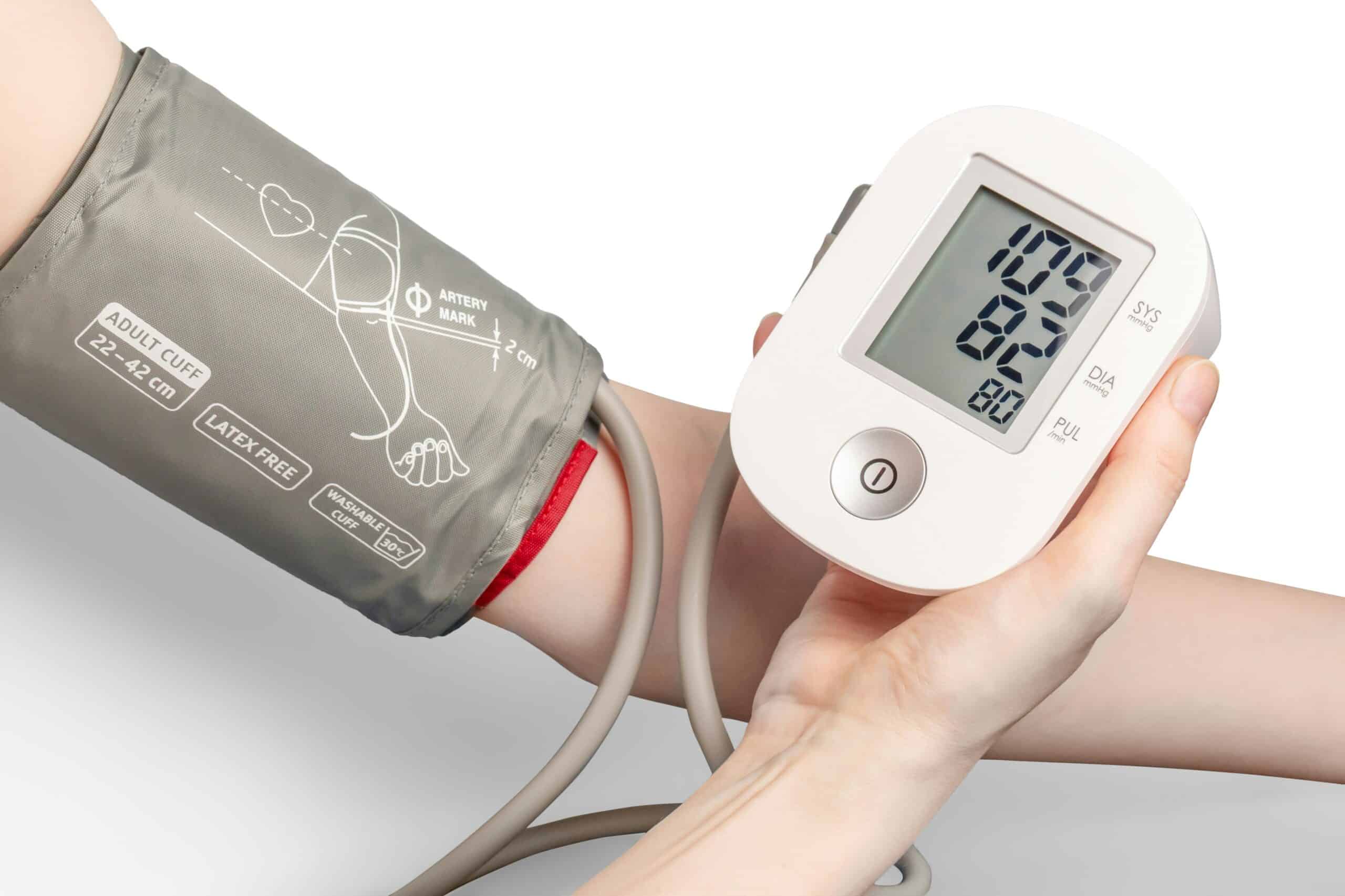
Usually not, because high blood pressure typically produces no symptoms at all, which is precisely why it is screened for rather than felt. Asking whether high blood pressure can cause headaches is worth doing carefully, since the widespread belief that it does leads people to the wrong conclusion in both directions.
There is one genuine exception, and it is an emergency rather than a nuisance. Our guide to how migraines are diagnosed covers the process of sorting out what a headache actually is.
Medical Disclaimer
This article is general information about blood pressure and headache. It is not medical advice and does not replace measurement, diagnosis or treatment by a clinician. Never start, stop or adjust blood pressure medication based on a guide or on how you feel. Severely elevated readings with symptoms require emergency care.
Quick Answer
Ordinary high blood pressure is generally symptomless, so a headache is not a reliable indicator of it and its absence is not reassurance. Pain itself raises blood pressure, which is why a reading taken during a headache is often high for the opposite reason people assume. Severely elevated readings are a separate, urgent situation.
Key Points
- High blood pressure usually causes no noticeable symptoms.
- A headache is not a way to detect it, and no headache is not a way to rule it out.
- Pain raises blood pressure, so the causation commonly runs backwards.
- Severely elevated readings with symptoms are a medical emergency.
- Some blood pressure medications are used to prevent migraine, which confuses people.
- Migraine and high blood pressure are both common, so coexistence is unremarkable.
- Readings are measured properly and repeatedly, not judged from one moment of pain.
| Situation | What it usually means | What to do |
|---|---|---|
| Headache, and a raised reading taken during it | The pain is likely raising the reading | Re-measure when comfortable, at rest |
| Headaches, and normal readings | Nothing about blood pressure | Pursue the headache on its own terms |
| High readings, no headaches | The usual presentation | Treat the readings, not the symptoms |
| Severely elevated reading plus severe headache | Possible hypertensive emergency | Emergency care immediately |
| Severely elevated reading plus chest pain or breathlessness | Possible hypertensive emergency | Emergency care immediately |
| Sudden severe headache, any reading | Needs urgent assessment regardless | Emergency care immediately |
| Prescribed a blood pressure drug for migraine | A recognized preventive use | Ask which purpose it is serving |
High Blood Pressure Usually Has No Symptoms
This is the foundation and it contradicts what most people believe. The Centers for Disease Control and Prevention describes high blood pressure as usually having no warning signs or symptoms, with many people unaware they have it.
The American Heart Association goes further and addresses the belief directly, describing the idea that high blood pressure produces symptoms such as headaches and nosebleeds as largely mistaken outside of severely elevated readings.
The practical consequence runs in both directions and both are important. A headache is not a way to detect high blood pressure, and feeling fine is not a way to rule it out.
That is the entire reason blood pressure is measured routinely rather than checked when something feels wrong. A condition with no symptoms can only be found by looking.
Why the Connection Feels So Real
People do not invent this association. They observe it, and the observation is real while the interpretation is usually backwards.
Here is the sequence. A headache begins. The person feels unwell, checks their blood pressure, and the reading is higher than usual. The conclusion that the pressure caused the headache follows naturally.
What has actually happened is the reverse. Pain raises blood pressure, and so does the apprehension of taking a reading while feeling unwell.
So the elevated number is a consequence of the headache rather than its cause. The same effect appears with pain of any kind, which is why readings taken during discomfort are treated cautiously.
Recognizing this matters because the alternative wastes effort. Time spent managing blood pressure to fix headaches is time not spent identifying what the headaches actually are. Our guide to migraine against ordinary headache covers that question directly.
The Genuine Exception
There is a real circumstance where blood pressure and headache connect, and it is urgent rather than chronic.
The International Headache Society’s classification recognizes headache attributed to hypertensive crisis and to marked blood pressure elevation, while not attributing headache to ordinary mild or moderate chronic hypertension.
That distinction is the whole point. The relationship exists at severely elevated levels and does not exist at the levels most people with treated or untreated hypertension live at.
A severely elevated reading accompanied by severe headache, chest pain, breathlessness, vision changes, confusion, or weakness is a medical emergency. The action is emergency services, not a recheck in an hour.
Separately, a sudden severe headache warrants urgent assessment whatever the blood pressure reading is. Our note on whether a migraine can cause a fever covers another situation where a headache plus a second finding changes the urgency.
Why Blood Pressure Medication for Migraine Confuses This
This is a genuine source of muddle and it is worth untangling.
Several medications developed for blood pressure are established migraine preventives. Beta blockers are the best known example, and certain other cardiovascular classes are also used this way.
So a person with migraine and normal blood pressure can be prescribed what they recognize as a blood pressure drug. The natural inference is that their migraine must be a blood pressure problem.
It is not. The medication is being used for a different effect on a different mechanism, and the prescription says nothing about the person’s blood pressure.
The useful question at an appointment is simply which purpose a medication is serving. Our guide to preparing for an appointment covers asking it, and it is a reasonable thing to want clear.
What to Actually Do About Your Readings
- Have blood pressure measured regularly regardless of headaches. The two questions are independent.
- Measure at rest, not during pain. Seated, still, after a few quiet minutes.
- Use the correct cuff size. A poorly fitting cuff produces a misleading number.
- Take more than one reading. Single measurements are noisy, and a trend is what matters.
- Record readings and headaches separately. Then look for whether they actually track each other.
- Do not adjust medication yourself. Not based on a headache, and not based on one reading.
- Treat a severely elevated reading with symptoms as an emergency. That is the one situation where the two genuinely connect.
Keeping both records side by side is what settles the question for an individual, and our guide to what to record in a headache diary covers the format. Our guide to how long to track before seeing a doctor covers how much data makes an appointment useful.
Related Reading
Frequently Asked Questions
Can high blood pressure cause headaches?
Usually not. High blood pressure typically produces no symptoms, which is why it is screened for rather than noticed. A headache is not a reliable indicator of it, and feeling well is not reassurance. The exception is severely elevated readings, which is an urgent situation rather than an everyday one.
Then why is my reading high when I have a headache?
Because pain raises blood pressure. Taking a reading while in discomfort, and while apprehensive about the result, produces a higher number. The elevation is generally a consequence of the headache rather than its cause, which is the reverse of what people conclude.
If my blood pressure is normal, can I rule it out as a cause?
For practical purposes yes, and that was never the useful question. Because ordinary hypertension is not a recognized cause of everyday headache, a normal reading does not change the headache investigation. The headache still needs pursuing on its own terms.
When is high blood pressure with a headache an emergency?
When the reading is severely elevated and accompanied by symptoms such as severe headache, chest pain, breathlessness, vision changes, confusion, weakness or difficulty speaking. That combination calls for emergency services immediately. A sudden severe headache needs urgent assessment regardless of the reading.
Why was I given a blood pressure medication for migraine?
Because several medications developed for blood pressure are established migraine preventives, with beta blockers the best known. The prescription reflects a different intended effect and says nothing about your blood pressure. Asking which purpose a medication is serving is a reasonable question at an appointment.
Can I have both migraine and high blood pressure?
Easily, since both are common. Coexistence is unremarkable and does not imply one causes the other. Each is managed on its own terms, which is why keeping separate records of readings and headaches is more useful than treating them as one problem.
Should I monitor my blood pressure at home?
Home monitoring is often recommended, and technique decides whether the numbers mean anything. Measure seated and at rest rather than during pain, use a correctly sized cuff, and take more than one reading. A trend across days is informative where a single measurement is not.
When should I see a professional?
For blood pressure, have it measured regularly whether or not you get headaches. For headaches, see a clinician for any new or changing pattern. Seek emergency care for a sudden severe headache, or for a severely elevated reading with any of the symptoms listed above. Never adjust medication on your own.
Sources
- American Heart Association. High blood pressure symptoms and myths.
- Centers for Disease Control and Prevention. High blood pressure: symptoms and screening.
- International Headache Society. International Classification of Headache Disorders, headache attributed to arterial hypertension.
