
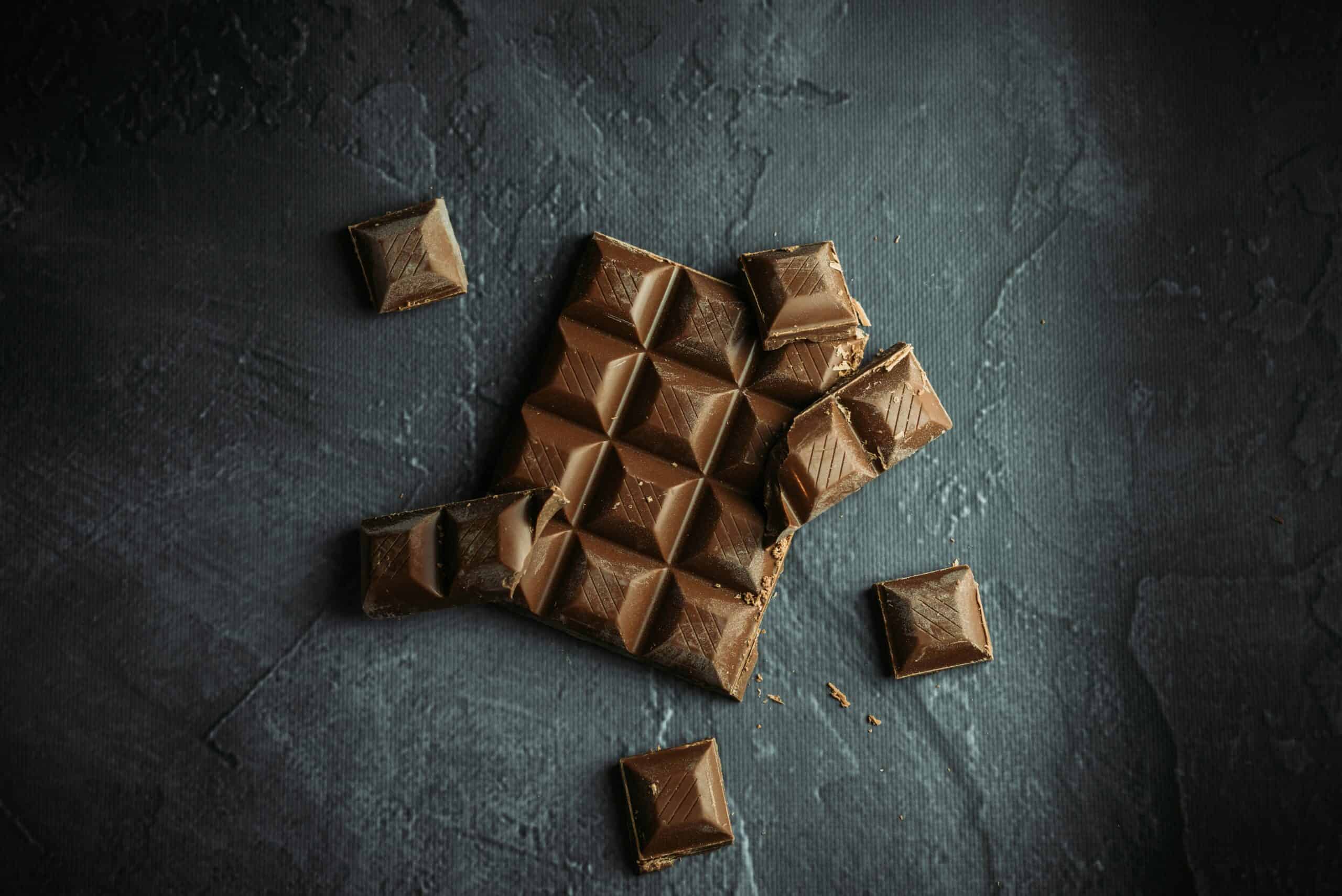
Chocolate appears on nearly every migraine trigger list and the research behind it is weaker than that suggests. There is also a specific reason it might be blamed for something it did not cause.
This covers what studies have found, why the timing confuses things, and how to test it on yourself. Our guide to common migraine triggers covers the wider list.
Medical Disclaimer
This is general information, not medical advice. Migraine is a neurological condition and treatment decisions belong with a doctor. Nothing here is intended to guide dietary changes without medical input.
Quick Answer
Chocolate is widely reported as a trigger and controlled studies have largely failed to confirm it. A likely explanation is that craving sweet food is a recognized prodrome symptom, meaning the attack had already started before the chocolate was eaten. Our aged cheese guide applies the same test to dairy.
Key Takeaways
- Self-reports are common, experimental confirmation is not.
- Craving is a documented prodrome symptom.
- The attack may precede the chocolate rather than follow it.
- Cutting foods on weak evidence has real costs.
- Individual testing beats general lists.
What the Evidence Looks Like
| Source | What it shows |
|---|---|
| Patient self-reports | Chocolate commonly named |
| Controlled challenge studies | Largely failed to reproduce attacks |
| Prodrome research | Food craving occurs before pain |
| Timing of consumption | Frequently within the prodrome window |
| Chemical content | Proposed mechanisms not established |
| Individual variation | Some people report consistent effects |
The Craving Comes First
The most interesting finding here is that the sequence people assume may be backwards.
The prodrome phase begins hours to days before head pain, and among its recognized features are changes in appetite and cravings for particular foods.
Someone who craves chocolate, eats it, and then develops a migraine has experienced two things in order. That order does not establish which caused which.
If the craving was itself an early symptom, the attack was already underway when the chocolate was eaten, and eliminating chocolate would change nothing.
This explanation accounts for both the strength of the self-reports and the weakness of the experimental findings. Our guide to prodrome symptoms covers that phase in detail.
Why Studies Disagree With Reports
Challenge studies rarely reproduce the effect
Giving chocolate does not reliably bring on attacks.
Self-reports are all retrospective
Recalled after the attack rather than recorded before it.
Expectation shapes the attribution
Knowing the usual list changes what gets blamed.
Individual responses may still be genuine
A group finding hides individual patterns.
The Proposed Mechanisms
Several chemical explanations get offered, and none is established.
Chocolate contains compounds including caffeine and various amines, and these have been suggested as plausible contributors to headache.
The amounts involved are small in an ordinary portion, particularly compared with other sources people consume without incident.
Caffeine complicates it in a different direction, since caffeine withdrawal is itself a recognized headache cause and chocolate contributes only a little.
Plausible mechanisms are not evidence of effect, and the gap between the two is where most trigger folklore lives. Our note on caffeine and migraine covers a substance with better-established effects.
What Would Change the Answer
It is worth being clear about what evidence would settle this, because that is what is missing rather than interest in the question.
A convincing result needs chocolate given without the participant knowing, since expectation shapes both symptoms and reporting.
It also needs the timing controlled, so consumption happens outside any window where a prodrome could already be underway.
Both are difficult. Blinding chocolate is genuinely hard, and knowing when a prodrome began is close to impossible from the outside.
That difficulty is why the question has stayed open rather than being resolved in either direction, and why confident claims on either side are ahead of the evidence.
Testing It On Yourself
General findings settle nothing about you specifically, which makes personal testing the useful step.
The key is logging what was present rather than what you suspect, since recording suspicions turns a diary into a record of your assumptions.
Note when chocolate was eaten, including the time, and note cravings separately from consumption. That distinction is what separates prodrome from trigger.
Record days with chocolate and no attack too. Without those, any food eaten regularly will appear implicated.
If a pattern does emerge from your own record, that is worth more than any general finding, since the question was always about you rather than about chocolate.
Months of data are needed before a pattern means anything in a condition this variable. Our migraine trigger tracker covers what to log.
Where Food Triggers Sit Generally
Chocolate is one example of a broader pattern in migraine research that is worth understanding.
Several commonly named food triggers share the same profile: widely self-reported, rarely reproduced under controlled conditions, and plausibly explained by the prodrome.
Some appear to have better support than others, and the evidence base varies considerably between them rather than being uniform.
What also appears consistently is that triggers accumulate rather than acting alone, so a food eaten during a week of poor sleep behaves differently from the same food on a settled week.
That accumulation is another reason single-food elimination frequently disappoints. Removing one contributor lowers total load without necessarily crossing back below the threshold.
The Cost of Cutting Foods
Eliminating foods on weak evidence is not free, which matters when the evidence is as mixed as this.
Each restriction narrows what you eat, and stacking several can affect diet quality in ways that create their own problems.
Skipping meals is itself a commonly reported trigger, so a restrictive approach that makes eating harder can work against you.
There is a psychological cost as well, since anticipating an attack from ordinary food adds a vigilance that is unpleasant to live with.
Any significant dietary change is worth discussing with a doctor rather than making alone. Our note on whether skipping meals triggers migraines covers that risk.
Common Mistakes to Avoid
Assuming the order proves causation
Craving is a prodrome symptom. Eating chocolate before an attack does not establish that it caused one.
Logging suspicion instead of fact
Record what was present and when. Recording what you blame makes the diary confirm what you already believed.
Tracking only attack days
Without clear-day data, anything eaten regularly looks implicated.
Cutting several foods at once
Multiple simultaneous restrictions make it impossible to learn anything, and they narrow the diet more than any single one.
Sources
- American Migraine Foundation, on migraine phases and food triggers.
- Mayo Clinic, on migraine triggers and individual variation.
- Cleveland Clinic, on dietary factors in headache.
- National Institute of Neurological Disorders and Stroke, on migraine as a neurological condition.
Recommended Reading
See our note on whether dehydration triggers migraines, our note on whether strong smells are a trigger, our note on how long migraines last, and our roundup of migraine tracking apps.
Chocolate and Migraine FAQ
Does chocolate trigger migraines?
It is commonly reported and controlled studies have largely failed to confirm it. Craving sweet food is a recognized prodrome symptom, which may explain the association.
What is prodrome?
The phase before head pain begins, which can start hours to days ahead and includes changes in appetite and cravings among its features.
So should I still eat chocolate?
That depends on your own pattern rather than on general findings. Track it properly before deciding, and discuss significant dietary changes with a doctor.
Why do so many people report it?
Partly the timing, since craving precedes the attack. Partly expectation, since knowing chocolate is on trigger lists shapes what gets blamed afterward.
Is it the caffeine?
Chocolate contains only a small amount compared with coffee or tea, and caffeine withdrawal is a better-established cause of headache than chocolate is.
How do I test it properly?
Log consumption with times, log cravings separately, and record days with chocolate and no attack. Months of data rather than weeks.
Is cutting it out harmless?
Not entirely. Restrictions narrow diet, skipping meals is itself a reported trigger, and constant vigilance around food has its own cost.
When should I see a doctor about my migraines?
Before making significant dietary changes, and any time attacks are frequent, worsening, changing in character, or interfering with daily life.
Is it worth mentioning food at an appointment?
Yes. Bringing a diary that records food alongside attacks gives a doctor something concrete, and it also shows what you have already ruled out.
