
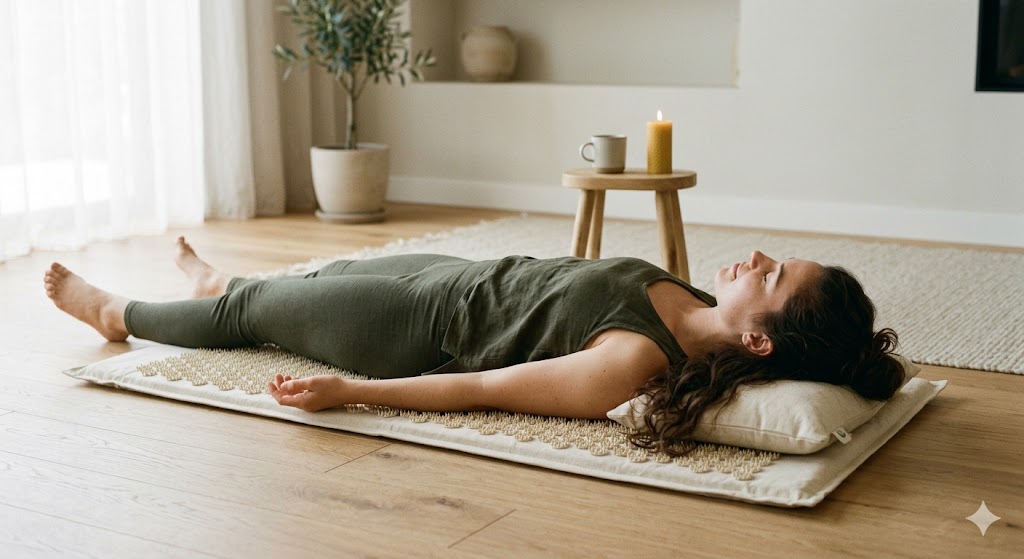
Acupressure mats occupy an unusual category in the migraine relief toolkit. They won’t stop an active migraine the way a triptan does, and they don’t prevent attacks the way preventive supplements or medications do. What they offer is something more specific: targeted reduction of the upper back, neck, and shoulder tension that triggers migraines for many sufferers, plus a parasympathetic nervous system response that reduces the chronic stress contributing to migraine frequency. For sufferers whose migraines connect to muscle tension or stress patterns, an acupressure mat becomes a useful daily tool rather than a one-time gimmick. For a related option, see our guide to acupressure pens for targeted pressure points.
This guide covers the five best acupressure mats for migraine relief in 2026, evaluated on point density, material quality, durability, and the practical question of whether the mat actually delivers therapeutic effects rather than just causing pain without benefit.
How Acupressure Mats Work for Migraine Sufferers
Acupressure mats use thousands of small plastic spikes pressing into your back, neck, and shoulders to stimulate pressure points and trigger several physiological responses. The mechanism isn’t mysterious or unproven, it works through documented pathways that have measurable effects.
Lying on the mat causes mild controlled discomfort that activates the body’s natural pain-management response. Endorphin release follows within 5-10 minutes of mat contact, producing the warm, relaxed feeling that regular users describe. For migraine sufferers, this endorphin response can reduce general pain sensitivity and help manage the stress patterns that trigger attacks.
Blood flow increases dramatically in the areas under the mat. The stimulation produces vasodilation in surface and deep tissue, which delivers more oxygen to muscle tissue and accelerates the removal of metabolic waste products. For sufferers whose migraines connect to upper back and neck tension, the most common pattern, the increased circulation helps muscle tissue release the chronic tightness that pulls on the head and triggers attacks.
Parasympathetic nervous system activation produces broader effects. Regular acupressure mat use shifts your nervous system out of the chronic fight-or-flight state that drives stress migraines. Heart rate decreases, breathing slows, and the muscle guarding patterns that maintain chronic tension begin to release. For stress-triggered migraine sufferers, this nervous system shift may matter more than the local pressure point effects.
For broader migraine prevention, our guides on the best magnesium supplements for migraine prevention and the best CoQ10 supplements for migraine prevention cover the supplement side that pairs well with acupressure mat use.
What to Look For in Acupressure Mats
Spike Density and Distribution
Quality acupressure mats use 6,000-8,000 plastic spikes distributed across the mat surface in flower-shaped clusters. Higher spike density distributes body weight across more contact points, reducing intensity per point and making the mat tolerable for users new to acupressure. Lower spike counts concentrate weight on fewer points, producing more intense stimulation that some experienced users prefer.
For migraine sufferers, moderate-to-high density (7,000+ spikes) typically works better than aggressive low-density alternatives. The lower per-point intensity produces the relaxation response without triggering the stress response that aggressive stimulation can cause.
Pillow Inclusion for Neck Stimulation
Standalone mats stimulate the back, shoulders, and lower back effectively but don’t directly address the neck, which matters specifically for migraine sufferers whose attacks connect to cervical spine tension. Sets that include a separate acupressure pillow for the neck address this gap directly, providing targeted stimulation to the suboccipital muscles and upper cervical region.
For migraine-specific use, the mat plus pillow combination produces meaningfully better results than the mat alone.
Material Quality
The mat surface should be 100% cotton or natural fiber, not synthetic polyester. Cotton breathes better, absorbs moisture during longer sessions, and produces less skin irritation than synthetic alternatives. The filler material should be natural coconut fiber or coir rather than plastic foam, natural fillers maintain shape better and produce more consistent pressure distribution.
The plastic spikes themselves should be ABS plastic, not lower-grade plastics that crack or break under repeated use. Quality mats survive years of regular use without spike degradation.
Mat Size
Standard acupressure mats run approximately 26 x 17 inches, sized for back coverage from the lower neck to the lower back when lying on it. Larger mats (32 x 20 inches) accommodate taller users and provide more flexibility in positioning. For migraine sufferers planning to use the mat daily, slightly larger sizing reduces the awkwardness of repositioning to cover different muscle areas.
Acclimation Friendliness
The first session on any acupressure mat is uncomfortable, the spikes feel sharp before your body adjusts. Quality mats produce discomfort that fades within 5-10 minutes as endorphins release. Cheap mats with poorly finished spikes produce sustained pain that doesn’t transition to the therapeutic response. Reading user reviews specifically for acclimation experience separates mats that work as intended from those that fail to produce the therapeutic effect.
Best Acupressure Mats for Migraine Relief in 2026: Our Top 5 Picks
1. ProsourceFit Acupressure Mat and Pillow Set, Best Overall
Best Overall Acupressure Mat for Migraines | Price: ~$30
Check Price on AmazonBest for: Most migraine sufferers, buyers wanting both mat and pillow for full upper-body coverage, first-time acupressure users testing the category.
ProsourceFit hits the practical sweet spot for migraine-focused acupressure. The set includes a 26.5 x 17 inch mat with 6,210 spikes plus a separate acupressure pillow with 1,782 spikes specifically sized for neck use. The combination addresses both the upper back tension and cervical spine tension that drive most tension-related migraines.
Material quality matches premium expectations at the price point. The mat surface is 100% cotton, the filler is natural coconut fiber, and the spikes are HIPS plastic that holds up across years of regular use. The construction quality genuinely matches mats costing twice as much from premium brands.
For migraine sufferers specifically, the pillow makes a difference. Lying on the mat with the pillow under your neck delivers simultaneous stimulation to the suboccipital muscles, upper trapezius, and cervical extensors, the muscle groups whose tension most directly triggers migraines. Standalone mats can’t reach these areas without awkward positioning.
PROS:
- Mat plus pillow combination addresses neck tension directly
- 6,210 spikes provide moderate-density stimulation
- 100% cotton cover with coconut fiber filler
- HIPS plastic spikes durable across years of use
- Affordable price point for set inclusion
CONS:
- Pillow may be too firm for some users
- Mat size adequate but not generous for tall users
- Color options limited compared to premium alternatives
- Acclimation period is required before regular use
2. Spoonk Eco Acupressure Mat, Best Premium Pick
Best Premium Pick | Price: ~$80
Check Price on AmazonBest for: Buyers prioritizing organic and eco-friendly construction, users wanting larger mat dimensions, and migraine sufferers willing to invest in premium materials.
Spoonk targets the premium end of the acupressure market with materials and construction that exceed budget alternatives meaningfully. The mat uses 100% organic cotton, natural rubber backing, and biodegradable filler materials that produce less environmental impact than standard mats. For users with chemical sensitivities or those prioritizing organic products, the material profile justifies the premium pricing.
Sizing runs slightly larger than standard mats at 27 x 16 inches, providing more positioning flexibility for taller users. The 6,210 spike count matches industry standards for moderate-density stimulation, and the spikes themselves are made from non-toxic plastic without the chemical residues that some users react to.
The trade-off is the price relative to alternatives. At $80, Spoonk costs more than double the ProsourceFit set without proportional improvement in core acupressure performance. The premium positioning makes sense for users with specific organic or environmental priorities; for general migraine relief use, the ProsourceFit delivers comparable functional results at a lower cost.
PROS:
- 100% organic cotton with biodegradable materials
- Natural rubber backing instead of synthetic alternatives
- Larger mat size for taller users
- Non-toxic plastic spikes without chemical residues
- Strong eco-friendly positioning
CONS:
- Premium pricing without proportional acupressure improvement
- No included pillow at this price point
- Less retail availability than mainstream brands
- Eco features unnecessary for users without specific priorities
3. Nayoya Back and Neck Pain Relief Set, Best for Severe Tension
Best for Severe Muscle Tension | Price: ~$45
Check Price on AmazonBest for: Migraine sufferers with significant chronic neck and shoulder tension, users wanting more aggressive stimulation than entry-level mats provide, and those whose migraines connect strongly to muscle patterns.
Nayoya targets the more aggressive end of the acupressure spectrum with 8,820 spikes distributed across the mat surface. The higher spike density actually produces less intense per-point stimulation by distributing body weight across more contact points, which sounds counterintuitive but works in practice, the mat feels less sharp while delivering broader coverage of the back muscle groups.
The included pillow uses 1,782 spikes with the same density philosophy. For users with significant chronic upper back and neck tension, the broader coverage works better than aggressive low-density alternatives that produce intense pressure on fewer points.
Material quality is solid without reaching premium levels. The cotton cover is acceptable, the foam filler holds shape adequately, and the spikes are durable plastic that survives regular use. For users prioritizing acupressure performance over premium materials, Nayoya delivers strong value.
PROS:
- High 8,820 spike count for broad coverage
- Includes mat and pillow for the full upper body
- Strong choice for chronic tension patterns
- Affordable at the mat-and-pillow set level
- Durable construction across regular use
CONS:
- Foam filler less premium than coconut fiber
- Cotton cover quality is below that of premium alternatives
- High spike count may feel too sharp for some users initially
- Color options limited
4. Bed of Nails Original, Best Aggressive Stimulation
Best for Experienced Users | Price: ~$60
Check Price on AmazonBest for: Experienced acupressure users wanting more intense stimulation, migraine sufferers who’ve outgrown entry-level mats, buyers seeking the most aggressive therapeutic effect available.
Bed of Nails takes the opposite design philosophy from high-density alternatives. The mat uses approximately 8,820 spikes, but with a sharper, longer point design that produces more intense stimulation per contact point. The result is a mat that aggressive acupressure users prefer over softer alternatives, but that defeats users new to the category.
For migraine sufferers who’ve used acupressure mats for months and find their entry-level mats no longer producing the same effect, Bed of Nails provides the next tier of stimulation. The intensity activates endorphin response more aggressively, which some experienced users describe as producing stronger relaxation effects than gentler mats.
The trade-off is acclimation. The first sessions on Bed of Nails are genuinely uncomfortable, many first-time acupressure users abandon the mat before reaching the therapeutic response phase. For migraine sufferers without acupressure experience, starting with the ProsourceFit and graduating to Bed of Nails after 3-6 months of regular use produces better long-term outcomes than starting at the aggressive end.
PROS:
- Most aggressive stimulation in our roundup
- Strong endorphin activation for experienced users
- Durable construction with longer spike design
- Established brand specifically for acupressure
- Available in multiple color options
CONS:
- Steep acclimation curve discourages beginners
- Premium pricing without including a pillow
- Intensity may overwhelm migraine-prone nervous systems
- Less suitable for daily extended sessions
5. AjnaWellbeing Acupressure Mat, Best Budget Pick
Best Budget Acupressure Mat | Price: ~$25
Check Price on AmazonBest for: Budget-conscious migraine sufferers, first-time acupressure users uncertain about category effectiveness, gift purchases for family members exploring the modality.
AjnaWellbeing delivers core acupressure functionality at the lowest price point that still meets quality standards. The mat measures 26 x 17 inches with 6,210 spikes, the same specifications as mid-tier alternatives at a meaningfully lower cost. The included pillow provides neck stimulation, which matters specifically for migraine-focused use.
Material quality is adequate but doesn’t match premium alternatives. The cotton cover is thinner than ProsourceFit, the filler uses standard foam rather than natural coconut fiber, and the spikes are functional plastic without a premium finish. For occasional use or initial testing of acupressure, these compromises don’t significantly affect performance.
The cumulative use case works well for budget acupressure. If the mat helps your migraines, you can upgrade to premium options later. If it doesn’t help, you’ve spent minimal money before discovering that acupressure isn’t your tool. Either outcome makes financial sense.
PROS:
- Lowest price point for mat-and-pillow set
- Adequate spike count and distribution
- Functional for first-time acupressure users
- Useful as a gift for family members exploring the modality
- Wide retail availability
CONS:
- Material quality below premium alternatives
- Foam filler less durable than coconut fiber
- Cotton cover is thinner than the premium options
- Less aesthetic appeal than premium brands
How to Use Acupressure Mats for Migraine Relief
The right protocol matters as much as the right mat for migraine-specific benefits.
Start short and build duration. Initial sessions should run 5-10 minutes before progressing to 20-40 minutes for established users. Pushing through extended sessions before acclimation defeats the therapeutic response and creates negative associations that prevent sustained use.
Use the mat preventively, not during active migraines. The mat works for tension reduction and stress management between attacks rather than as an acute treatment for active migraines. During an acute attack, the stimulation can actually intensify the headache through increased nervous system activation. Use acute treatments like cooling pads during attacks; reserve the acupressure mat for prevention.
Position carefully for migraine-specific use. Lie with the pillow under your neck and the mat covering from your shoulder blades down to your lower back. The neck position matters specifically for migraine sufferers, the suboccipital muscles connect directly to the dural pain receptors that produce headache pain.
Schedule consistent daily sessions. The therapeutic effects build with regular use rather than producing one-time benefits. Most users see meaningful migraine frequency reduction after 4-6 weeks of daily 20-minute sessions. Sporadic use produces minimal long-term effect.
Combine with breathing exercises. The parasympathetic nervous system activation that produces migraine prevention benefits responds strongly to slow controlled breathing during mat sessions. Eight-second inhales and twelve-second exhales while lying on the mat amplify the relaxation response.
Track frequency objectively. Use a migraine diary or tracking app to measure attack frequency before starting the mat and after 4-6 weeks of consistent use. Subjective impression of migraine changes is unreliable; written records reveal actual effects that perception misses.
Quick Comparison Table
| Mat | Best For | Price | Spike Count | Includes Pillow |
|---|---|---|---|---|
| ProsourceFit Set | Most users | ~$30 | 6,210 + 1,782 | Yes |
| Spoonk Eco | Premium organic | ~$80 | 6,210 | No |
| Nayoya Set | Severe tension | ~$45 | 8,820 + 1,782 | Yes |
| Bed of Nails Original | Experienced users | ~$60 | 8,820 | No |
| AjnaWellbeing Set | Budget pick | ~$25 | 6,210 + 1,782 | Yes |
Our Verdict
Most migraine sufferers do best with the ProsourceFit Acupressure Mat and Pillow Set. The mat-plus-pillow combination addresses both upper back and neck tension that drives tension-related migraines, the moderate spike density works for users new to acupressure, and the price point doesn’t require justifying a premium investment.
Buyers prioritizing organic materials and eco-friendly construction should consider the Spoonk Eco Acupressure Mat. The premium materials and larger sizing justify the price for users with specific environmental or chemical sensitivity priorities.
Migraine sufferers with significant chronic muscle tension benefit from the Nayoya Back and Neck Pain Relief Set. The higher spike density distributes pressure across more contact points, producing broader therapeutic coverage for chronic tension patterns.
Experienced acupressure users who’ve outgrown entry-level mats should look at Bed of Nails Original. The more aggressive stimulation matters for users whose nervous systems have adapted to gentler mats, though it’s inappropriate for first-time users.
Budget-conscious or first-time acupressure users can start with AjnaWellbeing Acupressure Mat. The lower cost lets you test whether acupressure helps your migraines before committing to premium options.
Pair the right mat with evidence-backed migraine prevention supplements like riboflavin, magnesium, and CoQ10, and you have a comprehensive non-prescription approach to migraine prevention that addresses both the cellular mechanisms and the muscle tension patterns driving attacks.
Frequently Asked Questions
Do acupressure mats help with migraines?
Acupressure mats help with migraine prevention for sufferers whose attacks are connected to muscle tension or stress patterns. The mats reduce upper back, neck, and shoulder tension while activating the parasympathetic nervous system, addressing two common migraine triggers. They don’t stop active migraines and aren’t useful as acute treatment, but regular preventive use reduces attack frequency for many sufferers.
How long should I lie on an acupressure mat?
Start with 5-10 minute sessions during the first week as your body acclimates to the spike sensation. Progress to 15-20 minutes after the first week, and 20-40 minutes for established users. For migraine prevention specifically, 20-30 minute daily sessions produce better results than longer occasional sessions. The therapeutic response builds with regular use rather than one-time extended sessions.
Are acupressure mats safe for migraine sufferers?
Yes, when used preventively rather than during active attacks. The mats are generally safe for migraine sufferers between attacks. During acute migraines, the increased nervous system stimulation can intensify the headache, so reserve medication use for prevention rather than acute treatment. Users with bleeding disorders, on blood thinners, or with skin conditions should consult their doctor before starting acupressure.
How quickly do acupressure mats work for migraines?
Acute relaxation effects appear within 10-15 minutes of mat contact through endorphin release. Migraine prevention benefits build over 4-6 weeks of consistent daily use. Sporadic or occasional use produces minimal long-term effect on migraine frequency. Track frequency objectively over a 6-week evaluation period to assess whether the mat is working for your specific migraine pattern.
Can I use an acupressure mat through clothes?
Beginners should start with a thin t-shirt between skin and mat to reduce initial intensity. As you acclimate over the first week, transition to direct skin contact for stronger therapeutic effects. The thin barrier reduces sharpness during acclimation without significantly compromising the underlying mechanism. Most experienced users prefer direct skin contact for maximum benefit.
Will an acupressure mat hurt?
The first 5-10 minutes feel uncomfortable as your body adjusts to the spikes. The discomfort transitions to warmth and relaxation as endorphins are released, this is the therapeutic response that produces benefits. If pain doesn’t transition to warmth within 10 minutes, the mat may be too aggressive for your current acclimation level. Start with shorter sessions and build up gradually rather than pushing through sustained pain.
Should I use an acupressure mat every day?
Daily use produces stronger migraine prevention benefits than occasional use. Most experienced users do 20-30 minute sessions daily, often timing them for evening relaxation before sleep. Some users alternate days to avoid overstimulation; experiment with frequency to find what works for your specific situation. Consistency matters more than absolute frequency for migraine-specific benefits.
Can acupressure mats replace migraine medications?
No. Acupressure mats supplement rather than replace migraine treatment. They work as one tool in a comprehensive approach that may include preventive medications, CGRP inhibitors, evidence-backed supplements, and lifestyle modifications. Don’t stop prescription medications to rely solely on acupressure, work with your headache specialist on the broader treatment plan and add acupressure as a supportive tool.
This is general information, not medical advice, and these products may ease symptoms but do not treat or prevent migraine. See a doctor for persistent or severe migraine.
More Migraine Guides
Sources
- Headache Classification Committee of the International Headache Society. The International Classification of Headache Disorders, 3rd edition. Cephalalgia. 2018;38(1):1-211. https://ichd-3.org/
- Linde K, Allais G, Brinkhaus B, et al. Acupuncture for migraine prophylaxis. Cochrane Database Syst Rev. 2016;6:CD001218. https://www.cochranelibrary.com/
- American Headache Society. Position Statement on Integrating New Migraine Treatments Into Clinical Practice. Headache. 2019;59(1):1-18. https://americanheadachesociety.org/
