
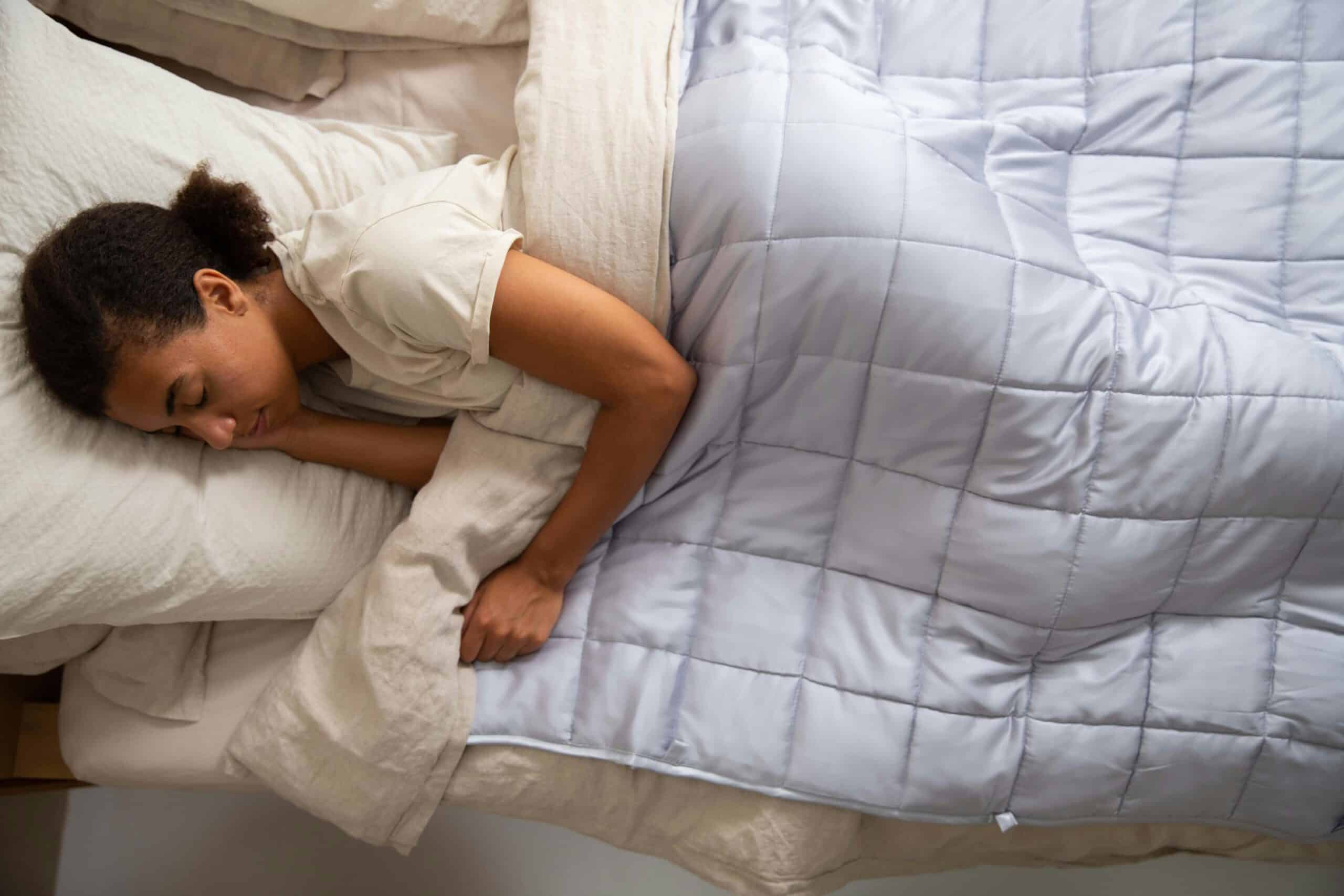
The best weighted blankets for migraine offer more than comfort, they deliver measurable neurological relief through deep pressure stimulation that calms the overactive nervous system behind chronic migraine attacks. If you’ve spent years lying in dark rooms waiting for migraines to pass, you know the particular torment of trying to sleep through an attack. Every nerve feels exposed. Light filtered through closed eyelids becomes unbearable. The pressure of a standard comforter somehow feels simultaneously too heavy and not heavy enough, as if your skin can’t decide whether it wants to be held or left alone.
Migraine sufferers often discover weighted blankets by accident, during a particularly bad attack, they curl up under the weighted blanket they bought for general anxiety, and something unexpected happens. The pain doesn’t disappear, but it becomes more bearable. The hypersensitivity reduces. Sleep becomes possible where it wasn’t before. The heaviness that was overwhelming a few minutes ago suddenly feels like the exact pressure the nervous system was demanding.
This isn’t a coincidence. Research on deep pressure stimulation (DPS), the physiological effect weighted blankets provide, shows measurable reductions in cortisol, increases in serotonin, and parasympathetic nervous system activation. For migraine sufferers specifically, whose attacks often involve autonomic nervous system dysregulation, DPS provides a mechanism for symptom relief that pharmaceutical interventions don’t fully replicate.
This guide walks through the best weighted blankets for migraine available in 2026, the specific criteria that separate genuinely migraine-appropriate blankets from generic weighted blankets, and how to choose the right weight and material for your body and migraine pattern. If you’re building a broader migraine management toolkit, our guides on best pillows for migraine sufferers and how to sleep with migraine cover complementary interventions that work alongside weighted blanket therapy.
Why weighted blankets work for migraine
The mechanism by which weighted blankets help migraine involves deep pressure stimulation’s effect on the autonomic nervous system. During a migraine attack, the sympathetic nervous system (fight-or-flight) often becomes hyperactive while the parasympathetic nervous system (rest-and-digest) under-responds.
Weighted blankets activate the parasympathetic response through sustained gentle pressure across the body. This pressure signals safety to the nervous system, reducing cortisol production and increasing serotonin release.
For migraine sufferers, the practical effects include reduced sensory hypersensitivity, decreased anxiety during attacks, improved sleep onset during prodrome, and shortened overall attack duration.
Why weighted blanket choice for migraine matters more than most sufferers realize
The category of weighted blankets spans generic products designed for general anxiety and insomnia to specialized versions that address specific conditions. Migraine sufferers have specific needs that generic weighted blankets may not meet.
The hypersensitivity challenge during migraine attacks
During migraine attacks, sufferers often experience allodynia, where normal sensations become painful. Skin becomes hypersensitive to touch. Hair feels like it’s pulling. Clothing tags become unbearable.
Weighted blankets that work well for general anxiety can trigger allodynia during migraine attacks if they have rough fabrics, uneven weight distribution, or chemical treatments that irritate sensitized skin.
Migraine-appropriate weighted blankets use ultra-soft fabrics (typically bamboo, Tencel, or minky), maintain smooth, even weight distribution, and avoid chemical treatments that might trigger sensitivity.
Temperature regulation during migraine
Many migraine sufferers experience temperature dysregulation during attacks. Some feel cold and crave warmth; others overheat and need cooling. A single weighted blanket needs to work across these varying states.
Cooling weighted blankets with moisture-wicking fabrics and breathable weighted fill (glass beads rather than plastic pellets) handle both states better than standard weighted blankets, which often cause overheating during longer use.
Weight distribution for sensitive pressure needs
Standard weighted blankets aim for 10% of body weight as the target. Migraine sufferers may benefit from a slightly lower weight (7-8% of body weight) because their pressure sensitivity can be more acute during attacks.
Weight distribution matters equally. Blankets with uneven weight distribution create pressure points that become painful during attacks, while evenly distributed weight provides consistent calming pressure across the body.
Washability and maintenance
Migraine sufferers often sweat during attacks or need to wash blankets more frequently due to medication side effects. Machine-washable weighted blankets that maintain their integrity through frequent washing matter for practical daily use.
Budget weighted blankets often require hand-washing or dry cleaning; premium options designed for regular washing last longer in practical use.
What to look for in a weighted blanket for migraine relief
The weighted blanket category contains products ranging from $30 basics to $200+ premium options. Here’s what actually matters for migraine sufferers specifically.
Appropriate weight for your body and sensitivity
Standard weighted blanket recommendations call for 10% of body weight. For migraine sufferers, 7-10% is the target range, with more sensitive individuals at the lower end.
If you weigh 120 pounds, a 10-12-pound blanket. Or if you weigh 150 pounds: 12-15 pound blanket. If you weigh 180 pounds: 15-18-pound blanket. And if you weigh 220+ pounds: 20-25 pound blanket
Start at the lower end of your range for the first month. You can always upgrade to heavier later if the lighter weight doesn’t provide enough pressure relief.
Cooling or breathable fabric construction
Migraine attacks often involve temperature dysregulation. Breathable fabrics prevent the overheating that can worsen symptoms.
Best options: Bamboo viscose (naturally temperature-regulating), Tencel (moisture-wicking), or cotton with breathable weaves.
Avoid: Polyester (traps heat), fleece (too warm for attacks), or fabrics with synthetic treatments.
Glass bead fill rather than plastic pellets
The weighted fill inside the blanket matters for both comfort and effectiveness.
Glass beads: Smooth, quieter, more evenly distributed, doesn’t retain heat. Preferred for migraine use.
Plastic pellets: Noisier, less evenly distributed, and can retain heat. Budget option, but less ideal.
Steel shot beads: Highest quality, most evenly distributed, but typically in premium-priced blankets.
Sewn compartments for even weight distribution
Quality weighted blankets use small sewn compartments (typically 4×4″ or smaller) that contain the fill in evenly distributed pockets. This prevents the fill from shifting and creating uneven weight concentrations.
Budget weighted blankets may use larger compartments or no compartmentalization at all, leading to fill that settles unevenly over time.
Removable washable cover
Weighted blankets are difficult to wash. A removable cover that can be washed separately simplifies maintenance dramatically.
Quality weighted blankets come with duvet-style removable covers in cooling fabrics. The weighted core itself rarely needs washing if the cover is changed regularly.
Migraine-specific size considerations
Weighted blankets come in various sizes. For migraine use:
Individual use (covering just your body): 48″x72″ or smaller for focused pressure. Bed-size for sleeping: Match your mattress size (twin, full, queen, king). Couch/rest use: 60″x80″ for versatile positioning
Many migraine sufferers benefit from having a smaller personal blanket for attack-specific use, separate from their bed blanket.
Non-toxic materials and certifications
Chemical sensitivities often accompany migraine. Look for certifications that indicate chemical-free production:
OEKO-TEX Standard 100: Tests for harmful substances GOTS (Global Organic Textile Standard): Organic materials certification GREENGUARD: Low chemical emissions
Blankets without these certifications may use chemical treatments that trigger migraine attacks in sensitive individuals.
Best weighted blankets for migraine in 2026: our top 5 picks
Five picks covering the full range of migraine-specific needs: best overall weighted blanket for migraine, best cooling option for hot-sleeping migraine sufferers, best budget pick, best premium option, and best small/portable blanket for targeted attack relief.
1. Baloo Living Weighted Blanket, Best Overall for Migraine
Best weighted blanket for most migraine sufferers | Price: ~$149
Check Price on AmazonThe Baloo Living Weighted Blanket earns the top recommendation for migraine sufferers through its combination of breathable cotton construction, evenly distributed glass bead fill, and OEKO-TEX certification. The blanket delivers consistent deep pressure stimulation across the body, avoiding the uneven pressure points that trigger allodynia during migraine attacks.
Baloo’s migraine-relevant construction
The cotton outer fabric breathes better than most weighted blanket materials, reducing the overheating that worsens migraine symptoms. The fabric’s smooth texture minimizes tactile sensitivity issues during attacks.
Glass beads provide the weighted fill, quieter and smoother than plastic pellets, with better heat dissipation. The small sewn compartments (3×3″) keep the beads evenly distributed across the body.
Weight options for sensitivity calibration
Baloo offers weights from 12 to 25 pounds, allowing precise matching to body weight. For migraine sufferers, starting at 7-8% of body weight provides the initial pressure without overwhelming sensitivity.
The blanket is machine washable without a separate cover, simplifying the maintenance that matters for regular weighted blanket use.
Certifications for chemical sensitivity
OEKO-TEX Standard 100 certification verifies that no harmful substances in the fabric. This matters significantly for migraine sufferers who often have chemical sensitivities that trigger attacks.
The cotton is also hypoallergenic, reducing the risk of allergic reactions that can compound migraine triggers.
Migraine-appropriate sizing
The 42″x72″ size fits individual migraine use perfectly, covering the body for pressure stimulation without extending to bed edges where it might pull away during movement. For bed use, Baloo offers larger sizes up to king.
Best for: Most migraine sufferers, buyers prioritizing quality construction, those with chemical sensitivities, and first-time weighted blanket buyers researching migraine-specific options.
PROS:
- Breathable cotton construction reduces overheating
- OEKO-TEX certified (no harmful substances)
- Glass bead fill (quieter and smoother than plastic pellets)
- Evenly distributed weight across small compartments
- Machine washable
- Multiple weight options from 12-25 pounds
- Hypoallergenic materials
CONS:
- Premium pricing vs budget alternatives
- No separate removable cover (requires washing the entire blanket)
- Limited color options
- Cotton may feel slightly warm in hot climates
- Heavier weights (20+ pounds) difficult to handle alone
2. Luna Adult Weighted Blanket, Best Cooling for Migraine
Best cooling weighted blanket for migraine | Price: ~$65
Check Price on AmazonFor migraine sufferers who run hot or experience temperature dysregulation during attacks, the Luna Adult Weighted Blanket combines cooling bamboo viscose construction with migraine-appropriate weight distribution. The blanket provides the deep pressure stimulation that benefits migraine relief without the overheating that compounds symptoms.
Bamboo viscose for temperature regulation
Bamboo viscose naturally regulates temperature by wicking moisture away from the body and allowing heat dissipation. During migraine attacks, when temperature dysregulation is common, this fabric adapts to the body’s needs rather than contributing to them.
The bamboo fiber also has natural antimicrobial properties, reducing odor accumulation during extended use.
Weight options and distribution
Luna offers weights from 10 to 25 pounds with evenly-distributed glass bead fill in 4×4″ compartments. The distribution is slightly less fine than Baloo’s 3×3″ but still prevents the uneven pressure points that trigger allodynia.
Value-tier construction with migraine relevance
At $65 versus Baloo’s $149, Luna represents significant cost savings while maintaining most of the features that matter for migraine sufferers. The trade-offs: shorter expected lifespan (3-5 years vs 5-7 for premium), slightly less even weight distribution, and less certified material testing.
Practical features
Machine-washable construction simplifies maintenance. Multiple color options accommodate personal preference. Standard weight ranges cover most body types.
Best for: Hot-sleeping migraine sufferers, those with temperature dysregulation during attacks, budget-conscious buyers, people in warm climates, and first-time weighted blanket buyers testing the migraine application.
PROS:
- Cooling bamboo viscose fabric
- Moisture-wicking for temperature management
- Naturally antimicrobial
- Reasonable price for quality construction
- Multiple weight options
- Machine washable
- Multiple color options
CONS:
- 4×4″ compartments are less fine than premium alternatives
- Shorter expected lifespan (3-5 years)
- Fewer certifications than premium options
- Bamboo viscose can pill over extended use
- Not as durable as cotton alternatives
3. YnM Weighted Blanket, Best Budget for Migraine
Best budget weighted blanket for migraine | Price: ~$40
Check Price on AmazonFor budget-constrained migraine sufferers wanting to try weighted blanket therapy without a significant investment, YnM’s weighted blanket provides functional pressure stimulation at approximately $40. The construction compromises are real but predictable: basic materials, simpler construction, and less refined distribution.
Adequate basic function
The blanket provides the core deep pressure stimulation benefit at a fraction of premium prices. The glass bead fill (rather than plastic pellets) delivers appropriate migraine-relevant pressure.
Weight options from 5 to 25 pounds accommodate most body weights and sensitivity needs.
Construction trade-offs
The outer fabric is standard cotton, less breathable than bamboo but more breathable than polyester. For cooler climates or less temperature-sensitive migraine patterns, this is adequate.
Compartments are 6×6″, larger than premium alternatives, leading to less even weight distribution over extended use. This may cause pressure point issues during particularly sensitive migraine attacks.
Appropriate use case
YnM works well as:
- Testing purchase for validating weighted blanket therapy
- Backup blanket for secondary locations
- Starter blanket for those new to the category
- Gift purchase for migraine sufferers, testing the approach
Expected lifespan considerations
Expected functional lifespan is 2-3 years with regular use, significantly shorter than premium alternatives. For buyers validating whether weighted blanket therapy works for their specific migraine pattern, this lifespan matches their validation timeline.
Best for: Budget-constrained buyers, testing the weighted blanket category, secondary blankets, gift purchases, and first-time buyers validating the approach.
PROS:
- Lowest price for a functional weighted blanket
- Glass bead fill (not plastic pellets)
- Multiple weight options
- Adequate for testing purposes
- Wide availability
- Machine washable
- Low-risk category entry
CONS:
- 6×6″ compartments lead to uneven distribution over time
- Standard cotton (less breathable than premium alternatives)
- Shorter expected lifespan (2-3 years)
- No chemical sensitivity certifications
- Less refined for migraine-specific use
4. Gravity Blanket, Best Premium for Migraine
Best premium weighted blanket for migraine | Price: ~$195
Check Price on AmazonFor migraine sufferers wanting the premium tier of weighted blanket experience with features engineered for therapeutic use, the Gravity Blanket delivers the highest-end construction and thoughtful design details. The duvet-style removable cover, smooth minky fabric, and fine-scale weight distribution create a premium experience, justifying the price.
Premium duvet-style design
The duvet-cover approach separates the weighted core from the washable exterior. The weighted core stays clean; only the cover requires regular washing. This practical design reduces maintenance friction significantly.
Two cover options are typically available, one cooling (for warm sleepers) and one cozy (for cool sleepers). This flexibility matches the temperature variability migraine sufferers experience.
Premium glass bead fill
Hand-distributed glass beads provide the most even weight distribution in the category. The fine-scale compartments (2×2″) concentrate pressure pockets appropriately for sensitive bodies.
The distribution density exceeds what budget alternatives can achieve, meaning the pressure felt across the body is more uniform.
Research-backed claims
Gravity cites clinical research supporting their weighted blanket for anxiety and sleep applications. For migraine sufferers whose attacks often involve anxiety components, this research provides confidence in the approach.
Construction quality
The construction uses higher-grade materials throughout, premium glass beads, professional-grade stitching, and durable cover fabrics. Expected lifespan is 5-7 years with regular use.
Premium pricing justification
The $195 price reflects genuine engineering improvements over mid-tier alternatives. For buyers who would purchase a weighted blanket anyway and value the refinements, the premium is justified. For buyers seeking basic weighted blanket function, the Baloo or Luna provides 85-90% of the benefit at 35-50% of the cost.
Best for: Premium-focused buyers, those who want the most refined weighted blanket experience, serious migraine sufferers investing in long-term relief tools, and gift givers seeking luxury options.
PROS:
- Duvet-cover design simplifies maintenance
- Hand-distributed glass beads for uniformity
- 2×2″ fine-scale compartments
- Dual cover options (cooling/cozy)
- Clinical research citations
- Premium construction throughout
- 5-7 years expected lifespan
CONS:
- Highest price in our guide
- Heavier overall weight than necessary for some users
- Premium for features many users don’t need
- Requires more care for maintenance
- Overkill for budget-focused buyers
5. Nest Bedding Weighted Blanket, Best Small/Portable for Attack Relief
Best small/portable weighted blanket for migraine attacks | Price: ~$99
Check Price on AmazonFor migraine sufferers who need portable pressure relief during attacks, whether they’re lying on the couch, retreating to a dark room, or trying to sleep through an attack while traveling, Nest Bedding’s weighted blanket offers a smaller size optimized for attack-specific use. The 40″x50″ dimensions cover the upper body where migraine-sensitive pressure is most needed.
Small-sized migraine application
The compact 40″x50″ size covers the torso and chest area where most migraine pressure relief happens. Full-size blankets can feel overwhelming during attacks when sensory overload is already present.
Smaller sizes also reduce the weight burden during attacks when larger blankets may feel physically restrictive.
Quality construction at a manageable size
Despite the smaller size, the construction quality matches larger premium alternatives: evenly distributed glass beads, small sewn compartments, and breathable fabric construction.
The 10-12 pound weight range is appropriate for typical adult migraine sufferers seeking focused pressure relief rather than full-body pressure.
Portability benefits
The smaller size makes the blanket portable for:
- Travel (fits in suitcases)
- Couch or chair use (doesn’t drag on floor)
- Targeted body positioning (over the chest during attacks)
- Covering the head/shoulders during light sensitivity
Secondary blanket applications
Many migraine sufferers benefit from having both a full-sized bed weighted blanket and a smaller attack-specific blanket. This Nest Bedding size works well in the second role.
Best for: Attack-specific pressure relief, travel with migraine support, smaller-framed sufferers, secondary weighted blankets, budget-friendly premium option for focused use.
PROS:
- Portable size for travel and attack use
- Quality construction in compact form
- Glass bead fill evenly distributed
- Appropriate weight for focused pressure
- Wide application beyond just bed use
- Good secondary blanket for a multi-blanket approach
- Reasonable price for targeted use
CONS:
- Not suitable as a primary bed blanket
- Limited size doesn’t cover the full body
- Specific use case may not appeal to all buyers
- Less versatile than full-size alternatives
- Limited weight options (10-12 pounds only)
Quick comparison of the best weighted blankets for migraine
- Baloo Living Weighted Blanket, best overall, breathable cotton, ~$149
- Luna Adult Weighted Blanket, best cooling for hot sleepers, bamboo viscose, ~$65
- YnM Weighted Blanket, best budget option, ~$40
- Gravity Blanket, best premium, duvet-cover design, ~$195
- Nest Bedding Weighted Blanket, best small/portable for attacks, ~$99
How to choose the right weighted blanket for your migraine pattern
The right weighted blanket depends on your body, migraine pattern, and specific sensitivities. Here’s the decision framework.
Match weight to body size and sensitivity
Most migraine sufferers: 7-10% of body weight. Very sensitive to pressure: Start at 5-7% of body weight. Insensitive/bulk body type: Up to 12% of body weight
Err on the lighter side for first purchases. You can always add pillows or folded extra blankets for additional pressure; you cannot subtract weight from a too-heavy blanket.
Match fabric to your temperature needs
If you run hot during attacks: Bamboo viscose or cooling fabrics (Luna). And if you run cold during attacks: Cotton or warmer fabrics (Baloo). Or if you’re temperature-variable: Duvet-cover design with interchangeable covers (Gravity). Lastly, if you’re not sensitive: Standard cotton is adequate (YnM or Luna)
Match construction quality to usage frequency
Weekly use or less: Budget tier (YnM) is adequate. Daily use: Standard tier (Luna or Nest) Multiple daily use: Premium tier (Baloo or Gravity). Professional/therapeutic use: Premium tier with certifications
Match size to primary use case
Primary bed blanket: Match bed size. Focused attack relief: Smaller blanket (Nest). Multiple applications: Consider two, smaller for attacks, larger for bed. Travel use: Compact size (Nest) priority
How to use a weighted blanket for maximum migraine relief
Proper usage matters for realizing weighted blanket benefits. Here’s evidence-based guidance.
Start with a gradual introduction
If you’ve never used a weighted blanket, don’t start with full body coverage for hours. Begin with:
Week 1: 30-60 minutes of upper-body coverage while reading or relaxing. In Week 2: 1-2 hours of partial coverage during sleep onset. And In Week 3+: Full overnight use if the previous weeks felt comfortable
This progression allows your nervous system to adapt to the pressure stimulation gradually.
Use during migraine prodrome
The prodrome phase, early warning signs before full migraine attacks, represents the optimal intervention window. Weighted blanket use during prodrome may:
- Reduce the likelihood of attack progression
- Extend the prodrome duration, allowing time for other interventions
- Calm the nervous system activation that drives migraine development
Proper positioning during attacks
During active attacks:
- Cover the upper body and head gently (avoiding direct head pressure)
- Maintain cool room temperature to avoid overheating
- Keep the blanket available for removal if sensation becomes overwhelming
- Combine with other attack interventions (cold packs, dark room)
Combining with other therapies
Weighted blankets work synergistically with other migraine interventions:
- Cool therapy (forehead or neck), combines with the weighted blanket comfort
- Dark room, the two together maximize sensory reduction
- Aromatherapy (peppermint or lavender), enhances the calming effect
- Breathing exercises, a weighted blanket makes breathing work easier
Our guide on top migraine triggers guide covers environmental factors that affect migraine sensitivity.
Common weighted blanket mistakes migraine sufferers make
Several specific errors reduce the weighted blanket’s effectiveness for migraine.
Starting with too heavy a blanket
The “10% of body weight” rule that works for general anxiety often feels too heavy for migraine sufferers. Starting too heavy causes:
- Initial discomfort creates a negative association
- Inability to use the blanket during attacks (when sensitivity increases)
- Discouraging return to weighted blanket therapy
Start at 5-7% of body weight initially, adjusting upward as tolerance develops.
Expecting immediate dramatic relief
Weighted blankets provide gradual benefit, not immediate pharmaceutical-level relief. First-session expectations should be modest.
The cumulative benefit over 2-4 weeks of consistent use often exceeds single-session effects. Track your migraine patterns and sleep quality over this longer period to evaluate effectiveness.
Using during active allodynia
If your migraine has already progressed to significant allodynia (pain from normal sensations), adding any blanket, weighted or not, may worsen sensitivity. Save weighted blanket use for prodrome and post-attack recovery phases.
Not maintaining proper temperature
Overheating worsens migraine symptoms. If you find yourself sweating or uncomfortable, the blanket temperature is wrong for your current state. Adjust with cooling fabrics, lower room temperature, or different bedding combinations.
Inconsistent use
Weighted blankets work best with consistent use patterns. Sporadic use limits the cumulative benefit. Plan to use the blanket during:
- Every night of sleep
- Every migraine episode (as appropriate)
- Stressful situations that might trigger migraines
The research behind weighted blankets for migraine
While dedicated research on weighted blankets for migraine specifically is limited, extensive research exists on deep pressure stimulation’s physiological effects that apply to migraine contexts.
Deep pressure stimulation research
Studies on deep pressure stimulation (DPS) show:
- Measurable reductions in cortisol levels
- Increases in serotonin production
- Activation of the parasympathetic nervous system
- Decreased sympathetic nervous system overactivation
For migraine sufferers specifically, whose attacks often involve autonomic dysregulation, these effects translate into potential migraine relief mechanisms.
Anxiety research applicable to migraine
Weighted blanket research for anxiety shows:
- Reduced anxiety symptoms
- Improved sleep quality
- Lower subjective stress levels
- Shorter sleep latency
Migraine attacks frequently involve anxiety components, making anxiety-targeted research directly relevant.
Chronic pain research connections
Research on deep pressure for chronic pain applications shows:
- Reduced pain perception during pressure application
- Improved sleep despite the presence of pain
- Modified autonomic responses to pain
Migraine, while distinct from chronic pain conditions, shares some pathophysiology that makes these findings relevant.
Clinical observations
Many migraine clinicians observe weighted blanket benefits anecdotally:
- Patients report reduced sleep disruption during migraines
- Prodrome phase may be extended or attacks prevented
- Recovery time after attacks may be shortened
- Medication dependency may decrease
While anecdotal, these clinical observations align with the pharmacological mechanisms that weighted blankets provide.
The annualized cost math for migraine weighted blankets
Weighted blanket costs per year vary by tier and usage frequency.
Budget tier ($40 YnM, 2-3 year lifespan): $13-20/year. Appropriate for validation purposes.
Standard tier ($65-99, 3-5 year lifespan): $13-33/year. Best value for most migraine sufferers.
Premium tier ($149-195, 5-7 year lifespan): $21-39/year. Justified for serious migraine sufferers using the blanket daily.
Compared to migraine medication costs: Abortive migraine medications cost $150-1,500+ per month for sufferers with frequent attacks. A weighted blanket that prevents even one attack per month pays back rapidly.
The counterintuitive finding: Premium weighted blankets often have the lowest per-year cost over their lifespan, especially for daily users.
Accessories worth pairing with your migraine weighted blanket
Several companions improve the weighted blanket’s effectiveness for migraine relief.
Complementary migraine tools
Cool compress or ice pack: Apply to forehead or neck while using the weighted blanket for combined pressure-temperature therapy.
Blackout sleep mask: Eliminates light sensitivity during attacks. Works perfectly with the weighted blanket’s sensory reduction approach.
White noise machine: Masks sound triggers that can compound migraine attacks.
Related migraine relief resources
For broader migraine management strategies beyond weighted blankets, our guide on best migraine relief products covers the complete category.
For sleep-specific migraine support, how to sleep with migraine provides detailed positional and environmental guidance.
Pillow support for migraine
Weighted blankets work best combined with proper pillow support. Our best pillows for migraine sufferers guide covers pillow options that complement weighted blanket therapy.
Light-blocking solutions
Migraine-specific glasses: Filter light during attacks. Our best migraine glasses for light sensitivity guide covers options.
Blackout curtains: Create a dark room environment that pairs with weighted blanket use.
Our verdict on the best weighted blankets for migraine
The Baloo Living Weighted Blanket is the right weighted blanket for most migraine sufferers. At $149, it provides breathable cotton construction, OEKO-TEX certification, glass bead fill with even distribution, and multiple weight options, the combination of features that specifically addresses migraine-related sensitivities. For serious migraine sufferers using the blanket regularly, this investment pays back through cumulative migraine relief benefits.
Hot-sleeping migraine sufferers should consider the Luna Adult Weighted Blanket. The bamboo viscose construction prevents the overheating that worsens symptoms, and the $65 price point makes quality weighted blanket therapy accessible for budget-conscious buyers.
Budget-constrained sufferers wanting to validate weighted blanket therapy should start with YnM at $40. The trade-offs are real, but the core function works adequately for testing whether the approach fits your specific migraine pattern.
Premium buyers who want the most refined weighted blanket experience should invest in the Gravity Blanket. The duvet-cover design, hand-distributed beads, and premium construction justify the price for daily users valuing refined details.
Migraine sufferers seeking targeted attack relief should consider the Nest Bedding smaller weighted blanket. The portable size works specifically for attack-focused use without replacing the need for a primary bed blanket.
The broader point: weighted blankets represent one of the most evidence-supported non-pharmaceutical tools for migraine relief. The deep pressure stimulation mechanism operates on established neurological pathways that affect migraine severity and frequency. For migraine sufferers who haven’t tried weighted blanket therapy, the investment is modest compared to medication costs and offers genuine relief that compounds over time. Start with an appropriate weight for your body, prioritize breathable fabric for your climate, and use consistently to realize the cumulative benefits that distinguish weighted blankets from many other migraine interventions. For use at a desk or during an attack, our weighted lap pad picks cover the smaller format. Temperature swings during an attack are common, and the chills some people get with a migraine explain why weight and warmth help.
Frequently asked questions about weighted blankets for migraine
Do weighted blankets really help with migraines?
Yes, for many migraine sufferers. Weighted blankets provide deep pressure stimulation (DPS) that activates the parasympathetic nervous system, reducing cortisol and increasing serotonin. For migraine sufferers whose attacks involve autonomic nervous system dysregulation, this mechanism provides genuine relief. Research specifically on weighted blankets for migraine is limited, but extensive research on DPS supports the physiological mechanism. Clinical observations and user reports consistently describe meaningful symptom reduction during migraine attacks when using weighted blankets.
What weight should a migraine weighted blanket be?
Target 7-10% of body weight for migraine use, slightly lighter than the standard 10% recommendation for general anxiety. For a 150-pound person, 12-15 pounds works well. Start on the lighter end if you’re particularly sensitive to pressure, then adjust upward as tolerance develops. Too heavy a blanket can trigger sensitivity during attacks when allodynia is present. The right weight provides calming pressure without overwhelming sensory input.
Can a weighted blanket trigger a migraine?
Rarely, but possible in specific scenarios. Chemical treatments in some blankets can trigger chemical-sensitive migraines. Overheating from non-breathable fabrics can trigger temperature-sensitive attacks. Excessive weight can cause pressure-related discomfort that leads to stress-related attacks. Choose blankets with certifications (OEKO-TEX), breathable fabrics, and appropriate weight to minimize these risks. If a specific blanket triggers attacks, discontinue use immediately and try a different design.
How long should I use a weighted blanket during a migraine?
Use for the duration of the attack or as long as it provides comfort, typically 2-8 hours. Some migraine sufferers use weighted blankets for the entire attack duration; others prefer shorter periods with breaks. Listen to your body. If the blanket starts feeling uncomfortable or overwhelming, remove it. The therapeutic benefit comes from the nervous system calming, which happens relatively quickly once pressure is applied. Extended use beyond the comfort point doesn’t provide additional benefit.
Should I use a weighted blanket during a migraine or before one?
Both approaches have merit. Preventive use during prodrome (early warning signs) may prevent attack progression or reduce severity. Active use during attacks provides sensory reduction and pain management. Ideal approach: use nightly for preventive sleep quality benefits, use proactively when prodrome symptoms appear, and use during active attacks if tolerable. This multi-phase approach maximizes the potential benefit.
Are cooling weighted blankets better for migraine?
Yes, for most migraine sufferers. Temperature dysregulation is common during migraine attacks. Cooling weighted blankets (bamboo viscose, Tencel) prevent the overheating that worsens symptoms. Unless you run cold during attacks, cooling versions are generally the better choice. Duvet-cover designs with interchangeable covers offer maximum flexibility, you can use cooling or cozy covers depending on your state.
Can children with migraines use weighted blankets?
With pediatric-appropriate weight and size. The general guideline is 10% of body weight (not exceeding 2-3 pounds heavier than body weight). For children with migraines, start lighter (5-7% of body weight). Consult your pediatrician before using weighted blankets on children, especially those under 3 years old. Ensure the child can easily remove the blanket themselves without help.
How do I wash a weighted blanket for migraine use?
Follow manufacturer instructions, which vary by construction. Baloo and YnM are machine washable as whole blankets. Gravity uses a duvet-cover design where only the cover requires regular washing. Most weighted blankets should be washed in cold water, on a gentle cycle, and air-dried or tumble-dried on low heat. Avoid fabric softeners, which can affect weighted bead distribution. Wash every 4-6 weeks for regular users, or immediately after significant sweating during attacks.
This is general information, not medical advice, and these products may ease symptoms but do not treat or prevent migraine. See a doctor for persistent or severe migraine.
More Migraine Guides
Sources
- Headache Classification Committee of the International Headache Society. The International Classification of Headache Disorders, 3rd edition. Cephalalgia. 2018;38(1):1-211. https://ichd-3.org/
- National Institute of Neurological Disorders and Stroke. Migraine. National Institutes of Health. https://www.ninds.nih.gov/health-information/disorders/migraine
- Lipton RB, Bigal ME, Diamond M, et al. Migraine prevalence, disease burden, and the need for preventive therapy. Neurology. 2007;68(5):343-349. https://www.neurology.org/
